
Who Owns the Data When Someone Leaves?
Team data and personal know-how are not the same thing. Here is how InsightSignal draws the line.
The question every growing team eventually faces
Bring colleagues into a shared workspace and a question follows close behind: when someone leaves, what happens to the data they touched? It is worth answering carefully, because the honest answer isn't one rule — it is a distinction.
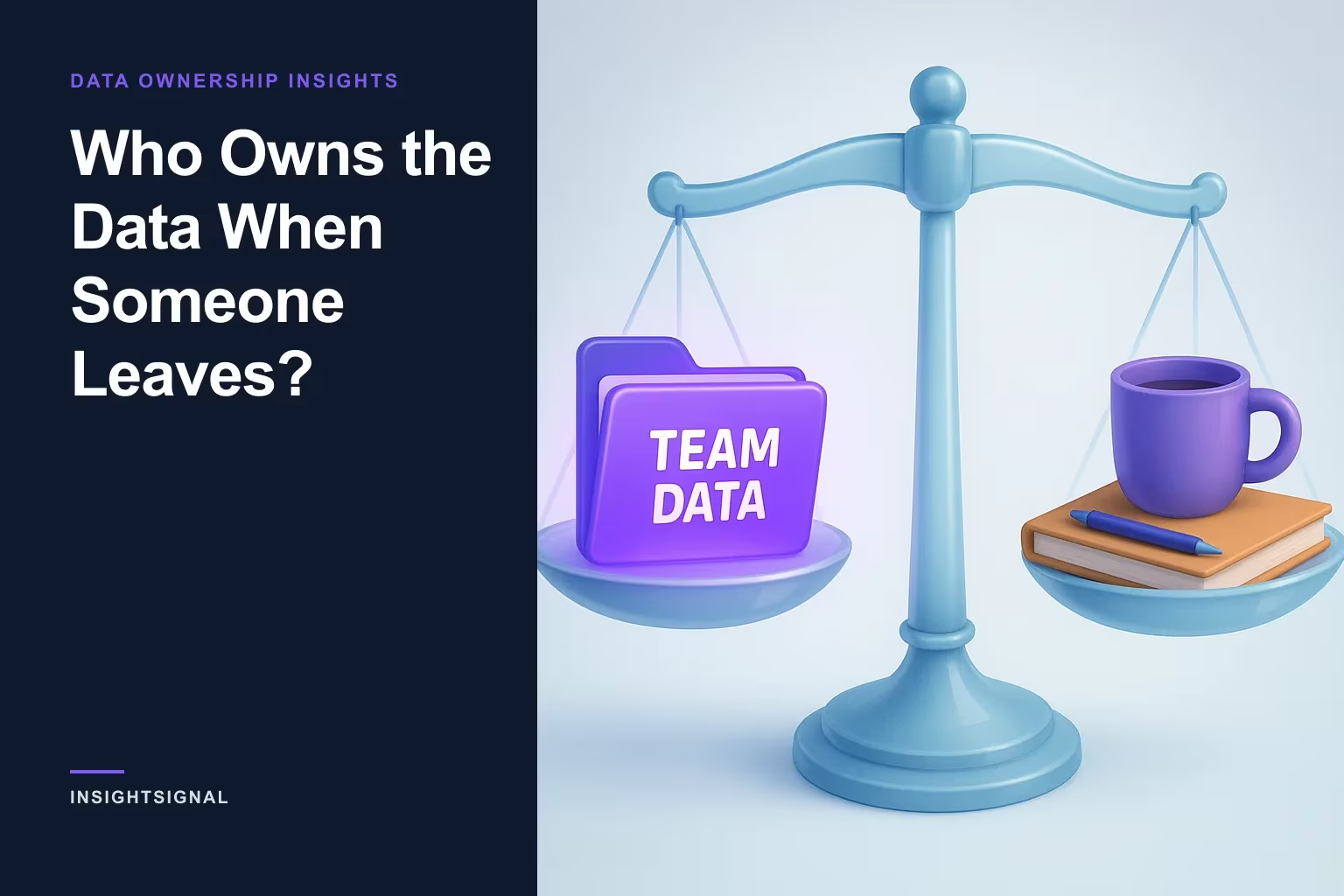
Team data and personal know-how are not the same thing. A tool that treats them as one thing will get this wrong in one of two directions: either it treats an individual's private work as company property, or it lets company assets walk out the door. The line between them is the whole point.
Two kinds of data
Inside a team organization there are really two categories of value. There is organization data — the verified companies, contacts, and research produced inside the team workspace. And there is personal know-how — an individual's own private workspace, their own saved approaches, the judgment they brought with them and will take when they go.
Most disputes about who owns the data are really a failure to name those two things separately. Teams Edition is built around the distinction rather than around a single blunt rule.
Work in the team workspace belongs to the organization
The first principle is straightforward: work done inside the team workspace belongs to the team. The companies a member verifies for the organization and the research they generate inside it are organization assets — they stay with the team, even though, day to day, each member works their own list.
That is what makes a shared workspace trustworthy to invest in. A team can build up months of verified data and research knowing it is the team's — not quietly tied to whichever member happened to run each job.
Everyone keeps a private personal workspace
The second principle balances the first: every member keeps their own personal workspace, entirely separate from any team they belong to. It is theirs. It doesn't dissolve into the organization, and it isn't visible to the team.
A person can belong to several teams — a contractor across multiple clients, say — and each of those, plus their personal account, stays cleanly separated. Joining a team never means surrendering your own workspace.
Sharing is a choice, and it is explicit
Between organization data and personal data sits a deliberate, member-controlled bridge. A member can voluntarily share their own saved scoring methodology with the team — a choice they make, not a default. And when someone uploads data into a workspace, they declare whether that data is organization data or personal data, so its status is set honestly at the moment it enters.
Those two features — voluntary methodology sharing and an upload-time declaration — mean the boundary isn't guessed at later. It is recorded, by the person who knows, when the data arrives.
Drawing the line well
The reason this matters beyond InsightSignal is that every team tool eventually faces the same question, and the ones that handle it badly do real damage — to trust, and sometimes to relationships. The principle worth holding onto is simple: shared work is shared, personal work is personal, and moving something across that line should be a deliberate, visible act.
Teams Edition is designed around that principle. Organization data stays with the organization, personal workspaces stay personal, and the bridge between them is something a member chooses to cross. See how the model works in practice in Working as a Team, or read the Teams Edition overview.
Copyright © 2024–2026 InsightOpus Inc.